For assisted living & home care
Know they're okay —
without a camera, without a wearable.
A room-based sensing system reads the reflections in ordinary WiFi to tell whether a room is occupied and whether activity looks normal — even in the bedroom and bathroom, where cameras are never welcome. Care teams and families get a reassuring status; residents keep their privacy, dignity, and independence. No camera. No microphone. Nothing to wear.
No cameras · No microphones · No wearables to charge or remember
How it works
A small system per room. Nothing worn, nothing watched.
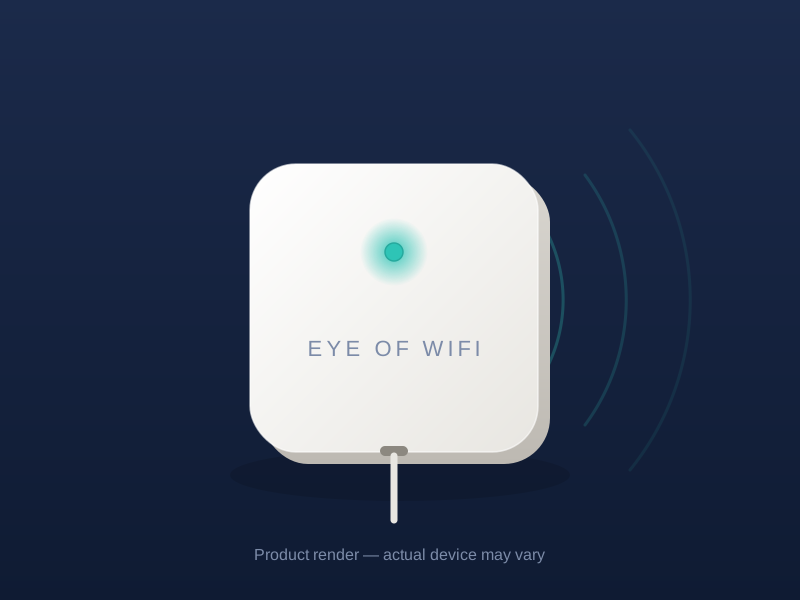
Eye of WiFi for care plugs into the room itself — presence, occupancy, and activity patterns, read from ordinary WiFi. No wearable to put on a resident, no lens to point at them.
Place a unit in the room
It plugs into an outlet and joins the facility's WiFi. Add a second or third unit per room for wider coverage and more confident alerts.
It senses movement & stillness
The system reads how WiFi reflects off motion — presence, activity, and unusually long stretches of stillness where movement is normally expected. No wearable, nothing to remember.
Staff or family get a status
A calm, reassuring status most of the time — and a prompt alert when something looks wrong, so a person can check in. People decide; the system informs.
Honest by design
What the system does — and what we won't claim
Dignity and honesty matter more here than anywhere. Here's the real scope.
A per-room system does
- Detect presence and whether a room is occupied
- Flag unusually long stretches of no motion where motion is normally present (early, experimental — we're upfront about that)
- Work in the dark and behind a closed door — nothing to wear
- Run with nothing to charge, remember, press, or take off
We will not claim it
- Replaces staff, nurse calls, or emergency response
- Is a medical device or a diagnosis (it is not)
- Detects a fall — that's not built yet, at any unit count
- Records anyone — there is no camera or microphone
It's an awareness tool that helps people respond faster while preserving privacy — not a replacement for human care.
Why camera-free matters here
Safety that residents will actually accept
Most seniors won't trade privacy for safety, and for many the bedroom and bathroom are off-limits to a camera — which is exactly where the majority of falls happen. Every alternative asks the resident to give something up: pendants get taken off or left uncharged, call buttons go unpressed during a fall, and floor mats wear out and get moved. Eye of WiFi senses the room itself, so there's nothing to wear, charge, press, or remember. It tells staff whether everything looks okay without a lens ever pointing at a person. That's the difference between monitoring residents can live with and monitoring they refuse.
Where we are today
- The sensing is built on proven WiFi-sensing physics (WiFi CSI) — the science is established and peer-reviewed.
- Built by a technical founder turning that science into a camera-free system for care.
- The product is in development; pilot units expected late 2026. We're looking for a small number of care operators to shape and pilot it — no fake photos, no compliance claims we can't back.
Talk to us about a pilot
If you run an assisted-living or home-care operation, leave your work email. We'll reach out personally — this is a conversation, not a sales funnel.
Questions
Straight answers
Is this a medical device?
No. Eye of WiFi is an awareness tool, not a medical device, and it does not diagnose anything. It helps staff and families see whether a room is occupied and whether activity looks normal. It does not replace nurse calls, clinical judgment, or emergency response. Fall-event detection is a capability we're building toward — we won't claim it until it's proven, and we publish what works and what doesn't.
How does it handle privacy and HIPAA?
The system has no camera and no microphone, so it never captures images or audio of a resident — it senses movement patterns, not identity. On HIPAA specifically: we will not claim to be "HIPAA-compliant" today, because that's a claim we can't yet back. What we will do is work with pilot operators on data handling that fits their obligations, and tell you plainly where we are. Honesty first.
Can it be used in the bathroom and bedroom?
Yes — and that's much of the point. Those are the rooms where a camera is most unacceptable to residents and families. Because it senses WiFi reflections rather than light, it works in the dark, behind a closed door, and even in steam, without a lens ever pointing at anyone.
Why use more than one unit per room?
One unit gives you presence and activity for that room. Adding a second or third buys wider coverage, multi-node confidence voting so a single reflection glitch doesn't trigger a false alert, and coarse zone awareness — a general sense of where in the room activity is happening. It doesn't unlock a different capability, just steadier, broader coverage of the same one.
Does the resident have to wear or charge anything?
No. That's much of the point. Pendants and wearables get taken off, left uncharged, or forgotten. Eye of WiFi senses the room itself, so there's nothing for a resident to remember or maintain.
When can we pilot it?
The product is in development, with pilot units expected late 2026. We're talking now with a small number of care operators who want to help shape it. Reaching out puts you first in line for that pilot.